A retaining wall is only as strong as what’s behind it.
Skipping proper backfill, or do it wrong makes wall lean, crack, shift, or collapse. It’s not a matter of if, it’s a matter of when.
Most people focus on how a retaining wall looks like the finish, the height, the material. But what’s packed behind that wall is what determines whether it stands for decades or starts failing within a few years. Improper backfill is one of the most common and most costly the mistakes made in retaining wall construction.
At MNJ Concreting & Landscaping, we’ve seen firsthand what happens when backfill is rushed, skipped, or done with the wrong materials. This guide breaks down exactly what goes wrong, why it happens, and how to make sure your retaining wall is built to last.
What Does Backfilling a Retaining Wall Actually Mean?
Backfill is the material packed behind a retaining wall after it’s been built. It fills the gap between the wall and the excavated earth behind it.
But backfill isn’t just about filling space. It’s about controlling pressure, managing water, and giving the wall a stable environment to do its job.
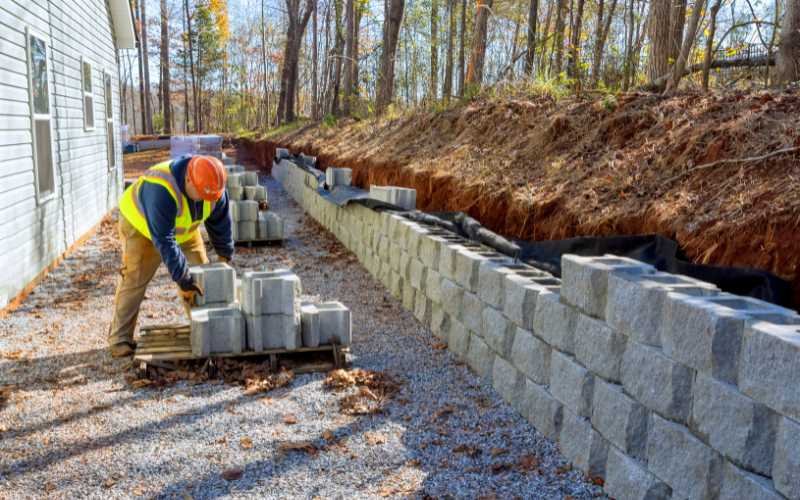
The right backfill material like typically crushed rock or drainage aggregate that allows water to move freely and distributes soil pressure evenly. The wrong material, or no proper process at all, sets the wall up to fail.
Why Proper Backfill Is More Important Than Most People Realise
A retaining wall holds back thousands of kilograms of earth. That pressure doesn’t sit still, it shifts with rain, temperature changes, and moisture in the soil.
Without proper backfill, that pressure has nowhere to go. It builds up directly against the wall. Over time, even a well-built wall cannot withstand that kind of sustained lateral force.
Proper backfill does three critical things:
- Reduces lateral pressure – granular materials like crushed rock don’t compact tightly against the wall the way clay or native soil does
- Manages water drainage – it allows water to pass through and escape rather than pool behind the wall
- Stabilises the base – well-compacted backfill prevents the footing from shifting or sinking
This is why homeowners investing in retaining walls in Cheltenham need to ask their contractor exactly what backfill process they follow, before a single block is laid.
What Goes Wrong When Backfill Is Done Incorrectly
The Wall Starts to Lean or Bulge
This is one of the most visible signs of backfill failure. When pressure builds unevenly behind the wall, it pushes against the weakest point.
You’ll notice the wall beginning to tilt forward or develop a visible bow in the middle. At this stage, the structural integrity is already compromised. In most cases, the wall needs to be rebuilt, not just repaired.
Water Builds Up Behind the Wall
Water is the number one enemy of a retaining wall. When backfill material doesn’t drain properly, water accumulates in the soil behind the wall.
This creates hydrostatic pressure that is the force of water pushing outward. Hydrostatic pressure can be two to three times greater than standard soil pressure alone. Without weep holes or drainage aggregate in the backfill, that pressure pushes relentlessly against the wall 24/7.
After heavy rain, poorly drained walls are at the highest risk of sudden failure.
Soil Erosion Undermines the Base
Improper backfill, particularly fine soil or clay that is highly susceptible to erosion. Water moving through or around the backfill carries soil particles with it.
Over time, this washing effect hollows out the base of the wall. The footing loses its support. The wall begins to sink, shift, or crack from the bottom up.
The Wall Cracks or Collapses Entirely
Left unchecked, all of the above leads to one outcome: failure. Cracks appear first, usually horizontal, running along mortar joints or through blocks. Then comes movement. Then collapse.
We’ve seen walls come down after just one or two heavy rain seasons when the backfill wasn’t done correctly. What looked like a solid structure on the outside was sitting on a ticking clock.
The Most Common Backfilling Mistakes We See on the Job
After years of building and repairing retaining walls in Doncaster and across Melbourne to the outer suburbs, these are the mistakes we see most often:
- Using clay or native soil as backfill – it retains water, expands when wet, and creates massive pressure against the wall
- No drainage layer – skipping crushed rock or drainage aggregate behind the wall is one of the biggest errors
- No weep holes – without outlets for water to escape, pressure has nowhere to go
- Backfilling too fast – dumping all the material at once without layering and compacting causes uneven settlement
- Poor compaction – under-compacted fill shifts and settles, pulling the wall in unpredictable directions
- Compacting too close to the wall – using heavy machinery right up against the wall during compaction can crack or displace it before it even has a chance to settle
What Should You Use to Backfill a Retaining Wall?
The best backfill material for a retaining wall is clean crushed rock or drainage aggregate that is typically 20mm to 40mm in size. Here’s why it works:
- It doesn’t compact tightly, so it reduces lateral pressure on the wall
- Water drains through it easily, preventing hydrostatic buildup
- It’s stable and doesn’t shift or erode the way fine soil does
Backfill material comparison:
| Material | Drainage | Pressure on Wall | Recommended? |
| Crushed rock / gravel | Excellent | Low | Yes |
| Coarse sand | Good | Low–Medium | Yes (with drainage) |
| Native soil | Poor | High | No |
| Clay | Very poor | Very high | Never |
| Organic fill | Poor | Variable | No |
A geotextile (filter fabric) placed between the backfill and the native soil also helps. It allows water through while stopping fine particles from migrating into the drainage layer.
How MNJ Concreting & Landscaping Gets Backfill Right
At MNJ Concreting & Landscaping, backfill isn’t an afterthought, it’s a core part of every retaining wall we build. As trusted retaining wall installers in Melbourne, we’ve seen what cut corners look like and we build to a standard that lasts.
Here’s our standard approach:
- Install drainage pipe at the base of the wall before any backfill goes in
- Place geotextile fabric against the excavated earth face to separate native soil from the drainage layer
- Backfill with clean crushed rock in 150–200mm layers
- Compact each layer carefully keeping machinery away from the wall face
- Ensure weep holes are clear and positioned to allow water to escape freely
- Cap the top with compacted material to direct surface water away from the wall
Every step matters. Cutting corners on any one of them puts the entire structure at risk.
Don’t Let Poor Backfill Undo a Good Wall
A retaining wall is an investment over the years. But what you can see, the blocks, the finish, the height, is only half of it. What’s packed behind it determines whether that wall stands strong for decades or starts showing problems after the first wet season.
Improper backfill leads to leaning walls, water damage, soil erosion, and in the worst cases, complete collapse. The fix is almost always more expensive than getting it right the first time.
At MNJ Concreting & Landscaping, we don’t cut corners on what you can’t see. Every wall we build is backed by the right materials, the right drainage, and the right compaction process, so you don’t have to worry about it later.
Ready to build a retaining wall that actually lasts?
Contact MNJ Concreting & Landscaping today for a free quote. We’ll check out your site, tell you the right solution and do the whole job right from the ground up, including the backfill.
Related: Slim Retaining Wall Ideas